4
Feb
2026
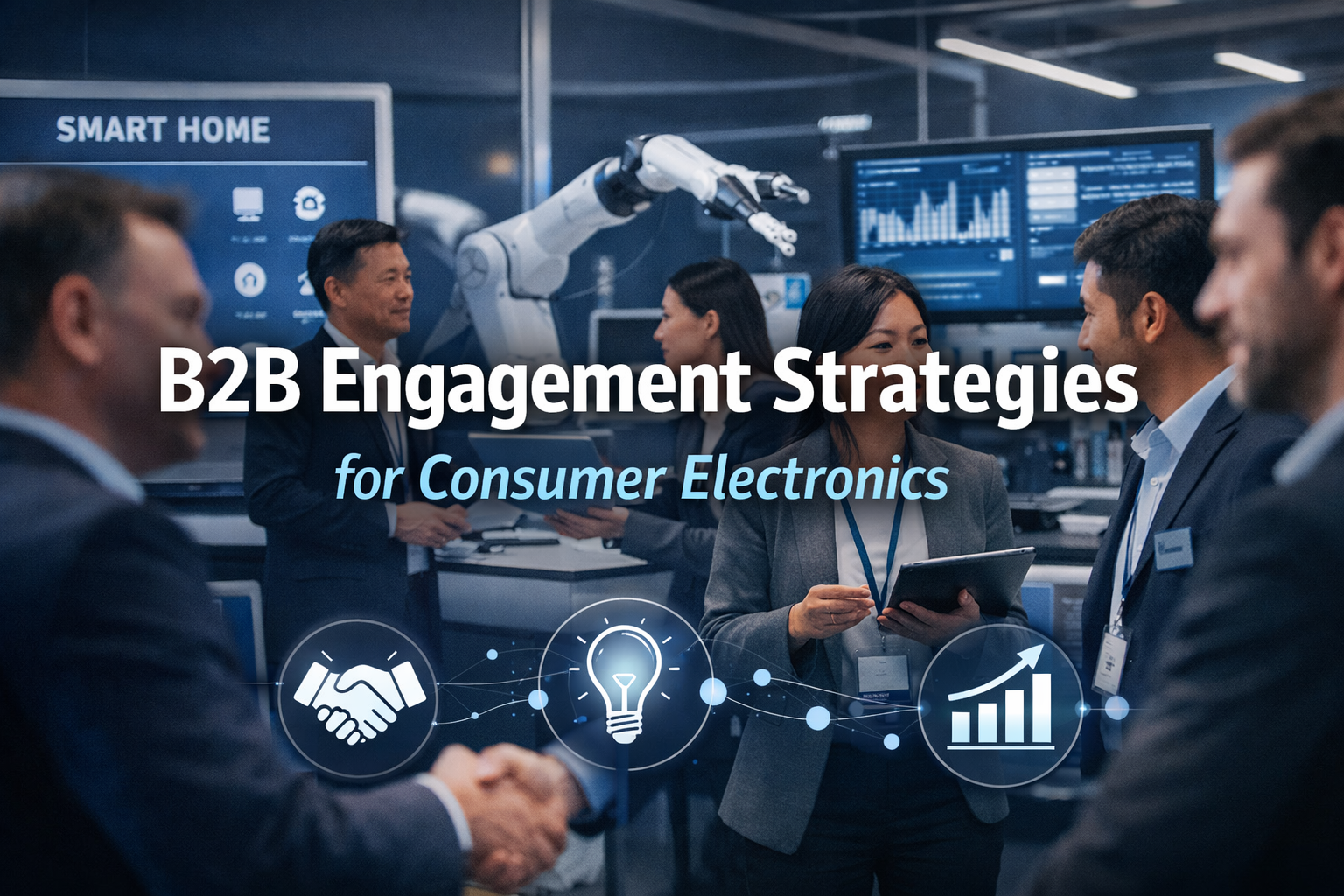
B2B Engagement Strategies for Consumer Electronics Brands
In the rapidly evolving landscape of consumer electronics, standing still is not an option. Whether you’re a manufacturer, distributor, retailer, or technology innovator, the industry is being reshaped by shifting buyer behaviour, technological disruptions, and global market forces. For brands seeking growth and relevance, traditional channels alone are no longer enough; strategic, highly targeted business engagement has become essential.
In this blog, we’ll explore why modern B2B platforms and industry engagement strategies matter more than ever for consumer electronics brands and what you should consider as you plan your growth strategy in 2026 and beyond.
Consumer Electronics: A Market Defined by Innovation and Disruption
The consumer electronics industry moves fast. From smartphones and wearables to smart home devices and connected ecosystems, innovation is relentless. Today, products aren’t just standalone items; they’re part of larger ecosystems enabled by Internet of Things (IoT), artificial intelligence (AI), and pervasive connectivity.
Under these conditions, companies can’t afford to rely solely on traditional distribution or retail channels. Buyers, including retailers, distributors, and channel partners, are looking for partners who can offer not just products, but solutions that align with evolving consumer lifestyles. This requires a deeper level of engagement than ever before.
The Value of Strategic Business Platforms in Building Market Presence
For executives evaluating their marketing, it’s worth understanding how modern business platforms serve as more than just exhibition floors. They are structured environments where:
- Innovation meets visibility: Products are evaluated not just on features, but on how they integrate into broader systems and use cases.
- Decision makers congregate: Key stakeholders from distribution networks, retail chains, and emerging markets gather to explore partnerships.
- Insights are exchanged: Peer discussions, trend analysis, and real-time feedback provide intelligence that’s hard to obtain through remote engagements alone.
This is a fundamental shift from passive brand awareness to active business development.
Strengthening Buyer Confidence Through Face-to-Face Engagement
In B2B relationships, trusted products influence purchasing decisions significantly. With complex technologies — such as smart appliances, IoT-enabled devices, and sustainable solutions — buyers increasingly need assurance before committing to stock or specifying a product. After all, they’re not just buying hardware; they’re buying performance, integration compatibility, and after-sales reliability.
Face-to-face engagement allows:
- Live demonstrations that showcase product capabilities in real business scenarios
- Technical discussions that resolve performance questions on the spot
- Rapid feedback loops that help refine product positioning
When manufacturers and solution providers can demonstrate their products in an environment where buyers are intent on sourcing, decision timelines shorten and confidence increases. This is especially true in categories where technical nuances matter, such as smart home systems, automation solutions, and advanced consumer electronics modules.
Networking with Purpose: More Than Just Lead Collection
In an era where digital engagement is ubiquitous, what distinguishes a meaningful business conversation from noise?
Today’s buyers and partners prioritise relevance over quantity. A marketing email reaching thousands of contacts may generate awareness, but it rarely creates the deep, solution-oriented dialogues that influence purchasing and distribution agreements.
Strategic business engagement platforms compress multiple layers of connection into concentrated, high-value interactions:
- Peer-to-peer discussions with category specialists
- Distributor and OEM relationships that open regional and international channels
- Partnerships with system integrators, installers, and solution architects
For example, distributors seeking to expand their product portfolios can identify not just products but also product partners that align with their strategic roadmaps. Retailers looking to differentiate their offerings can evaluate trends across categories, from smart appliances to lifestyle electronics.
Real-Time Market Intelligence: An Underestimated Competitive Edge
Pricing trends, consumer preferences, and technology adoption rates are not static figures. They shift from quarter to quarter, influenced by economic trends, regulatory changes, and global supply dynamics.
Business platforms enable companies to:
- Benchmark against competitors in real time
- Assess buyer expectations firsthand through direct conversations
- Collect actionable data on feature demand and pricing tolerance
This is particularly relevant in markets experiencing rapid middle-class expansion and increased spending on technology dynamics seen in economies like India’s, where digital adoption and consumer demand are driving growth in mobile, connected home, and lifestyle electronics.
Differentiating Your Brand in a Crowded Marketplace
With hundreds of categories and thousands of SKUs in the consumer electronics universe from wearable tech to kitchen appliances, differentiation is critical. The question isn’t just what you sell, but how you are perceived by the ecosystem of buyers, distributors, and specifiers.
Strategic engagement environments allow companies to:
- Showcase thought leadership through product storytelling
- Demonstrate social and technical credibility through live Q&A
- Build long-term enterprise value through curated introductions to stakeholders
Looking Ahead: Strategic Engagement as a Growth Driver
In the modern consumer electronics ecosystem, growth is not just a function of great products; it’s a function of how effectively you connect, communicate, and co-create value with the right partners.
B2B engagement platforms are not merely events; they are strategic accelerators. They bring your brand into direct contact with buyers and decision makers who are ready to explore, assess, and invest. When leveraged with clear objectives and disciplined execution, these platforms shorten sales cycles, strengthen distribution networks, and align products with market demand.
Conclusion
As the consumer electronics market continues to evolve rapidly, brands must reimagine how they engage with the broader ecosystem. Strategic business engagement characterised by purposeful interactions, market insights, and real conversations is one of the most significant levers companies have to accelerate growth. By understanding the dynamics of buyer behaviour, market trends, and the power of direct connection, brands position themselves not just to compete, but to lead.